
Digital forensic services in British Columbia.
Teradrive Forensics is a British Columbia digital forensics firm retained by law firms, corporate counsel, HR and insurance teams, and private clients. From our Langley lab, EnCE-certified examiners image and analyse computers, hard drives, USB media, mobile devices, and cloud accounts, then deliver court-ready reports and expert testimony.
Learn more about our computer forensics services for laptops, desktops, hard drives, and USB storage devices.
Court-ready computer, mobile, cloud, and data breach forensic services for BC law firms, businesses, and private clients. Main office in Langley, BC.
Get expert help now
Confidential · Free initial consultation
Please note that we are not the right resource for the following, and we do not take on these engagements:
- Checking a personal phone or computer for spyware or tracking software
- Investigating a personal email or social media account you believe was hacked
- Identifying who is behind an anonymous account or message
Certified examiners · Industry-standard forensic tooling
- EnCE — EnCase Certified Examiner
- Magnet AXIOM Certified
- Cellebrite-grade mobile extraction
- Hash-verified forensic imaging
- Langley, BC forensic lab
- Court-ready reports & expert testimony
Examinations are run by EnCE-certified examiners from our Langley laboratory using EnCase, Magnet AXIOM, and Cellebrite-grade extraction workflows, with hash verification and documented chain of custody. See our credentials.
Methodology
A defensible engagement, from first call to expert report.
Confidential intake
Initial consultation by phone or secure email. We confirm scope, custodians, devices, and timeline before any evidence is collected.
Forensic acquisition & analysis
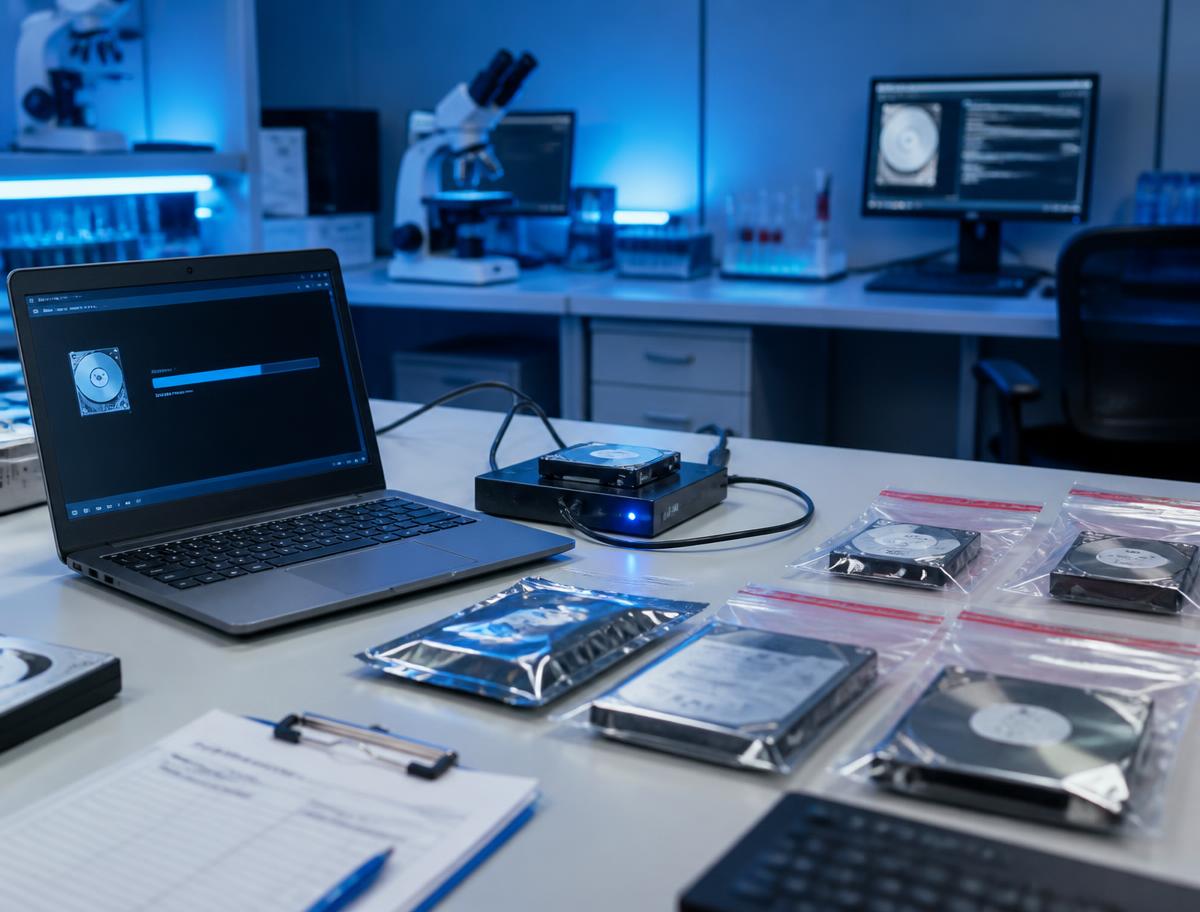
Hardware write-blocked imaging or Cellebrite-grade extraction at our Langley main office, hash-verified, then examined with EnCase, AXIOM, X-Ways, or other forensic tools matched to the matter.
Court-ready report
A written examiner report with exhibits, chain of custody, and methodology disclosures, drafted for Canadian civil or criminal proceedings.
Featured service
Computer Forensics
Computer forensics focuses on the preservation, recovery, and analysis of evidence from computers and storage media. Teradrive Forensics examines laptops, desktops, external drives, USB devices, and other digital storage sources to help determine what happened, when it happened, and whether relevant files or user activity can be identified.
Our computer forensics services can include forensic disk imaging, hash verification, deleted file recovery, file system analysis, browser history review, USB device activity, logon and user activity analysis, document access timelines, and evidence preservation for litigation or investigation. Each engagement is handled with attention to chain of custody, repeatable methods, and clear reporting.
Clients often request computer forensics for employee data theft, intellectual property concerns, civil litigation, family law evidence, criminal defence support, workplace investigations, unauthorized access, malware-related incidents, and lost or deleted files. Where appropriate, findings can be documented in a court-ready report that explains the evidence in plain language while preserving the technical detail needed for legal review.
Services
Our Digital Forensics Services
Computer forensics for laptops, desktops, and drives
Recover, preserve, and analyze evidence from laptops, desktops, external drives, and business systems. We identify deleted files, user activity, file access history, and artifacts needed for civil, criminal, employment, and corporate matters.
View computer forensics for laptops, desktops, and drives detailsMobile Forensics
Extract and analyze data from smartphones and tablets, including messages, call logs, photos, app data, location artifacts, and deleted content where recoverable. Our mobile forensic work supports litigation, workplace investigations, and private matters.
View mobile forensics detailsCloud Forensics
Investigate evidence from cloud accounts, email platforms, collaboration tools, backups, and SaaS environments. We help preserve account activity, access logs, files, messages, and other cloud-based evidence.
View cloud forensics detailsData Breach Investigation
Assess suspected compromise, unauthorized access, data theft, malware activity, and employee exfiltration. We preserve evidence, identify timelines, and produce findings that support legal and business decisions.
View data breach investigation detailsExpert Witness Support
Prepare court-ready reports, exhibits, affidavits, and expert testimony for legal matters requiring defensible digital evidence analysis.
View expert witness support detailsCourt-Ready Digital Forensics Deliverables
Every engagement is handled with preservation, repeatability, and defensibility in mind. Depending on the matter, deliverables may include forensic images, hash values, chain of custody records, examiner notes, technical findings, timelines, exhibits, affidavits, expert reports, and testimony support. Our process is designed to help counsel, businesses, and private clients rely on digital evidence in Canadian legal and investigative contexts.
Forensic Qualifications, Tools, and Methodology: Computer Forensics Laboratory in Langley
Teradrive Forensics uses accepted forensic practices and industry-recognized tools for computer, mobile, and cloud investigations. Examinations are carried out in our computer forensics laboratory in Langley by EnCE-certified examiners with Magnet AXIOM and Cellebrite mobile extraction certifications. Where appropriate, examinations may involve tools such as Magnet AXIOM, Cellebrite-grade mobile extraction workflows, EnCase, X-Ways, and other validated forensic utilities. Evidence is preserved with documented handling, hash verification where applicable, and reporting designed for review by counsel, courts, insurers, employers, and opposing experts.
Computer Forensics Across British Columbia
Every examination is performed in our Langley laboratory at 20627 Fraser Highway, with sealed evidence storage, write-blocked acquisition, and a documented chain of custody from intake to report. We pick up devices across Metro Vancouver and the Fraser Valley, accept secure shipping from anywhere in Canada, and perform remote acquisition for cloud accounts and many endpoint matters.
Engagements are retained by BC law firms, corporate counsel, HR and internal investigators, insurers, and private clients. Reports are written for review by counsel, courts, and opposing experts, and our examiners are available for expert witness testimony in BC Supreme Court, Provincial Court, and Federal Court. Consultations are by appointment — call (778) 900-5187 to scope a matter before evidence changes.
- Computer forensics in Langley
- Computer forensics in Vancouver
- Computer forensics in Surrey
- Computer forensics in Burnaby
- Computer forensics in Richmond
- Computer forensics in Coquitlam
- Computer forensics in New Westminster
- Computer forensics in North Vancouver
- Computer forensics in Abbotsford
- Computer forensics in Kelowna
- Computer forensics in All of British Columbia
What we do
Digital forensics for legal, business, and private matters in BC.
Who we serve
Who a digital forensics firm in BC works for every day.
As a digital forensics firm in BC, we are retained by law firms, corporate counsel, HR and internal investigators, and insurers across Metro Vancouver and the Fraser Valley. Every matter is examined by EnCE-certified examiners in our computer forensics laboratory in Langley and reported for use in BC Supreme Court, Provincial Court, and Federal Court.
Law firms.
Litigation, expert-witness, and Anton Piller execution support.
Corporate.
Internal investigations, IP theft, employee misconduct, fraud, and breach response.
Employment and HR.
Departing-employee matters, workplace investigations, and policy violations.
Insurance.
Coverage disputes, fraud claims, and subrogation forensics.
Family law.
Hidden assets, deleted messages, and electronic communication evidence.
Criminal defence.
Independent expert review and counter-analysis of Crown forensic evidence.
Why Teradrive
Why counsel choose this computer forensics laboratory in Langley.
Three things separate a defensible examination from a costly one: certified examiners (EnCE, Magnet AXIOM, Cellebrite), a controlled lab with write-blocked acquisition and sealed evidence storage, and reports written for expert-witness scrutiny rather than internal use.
Methodology
Every engagement uses a defensible, documented evidence-handling process built for Canadian courts. Chain of custody is documented from first contact through trial. Reports are written for Canadian courts, not for cybersecurity vendors.
In-house BC main office in Langley, BC
Our main office is at 20627 Fraser Hwy in Langley. Evidence stays under our custody from acquisition to archive. We pick up across Metro Vancouver, ship Canada-wide, and accept remote acquisition for cloud and many endpoint matters. No third-party processing. No offshoring of evidence.
Advanced extraction in-house
Cellebrite, Magnet AXIOM, OpenText EnCase, X-Ways, KAPE, and Chainalysis cover most engagements. For damaged, locked, or unsupported devices, we operate chip-off, JTAG, and ISP rework benches. Few BC boutiques offer this in-house.
Digital Forensics Services FAQ
Digital Forensics Services FAQ
What is computer forensics?
Computer forensics is the preservation, recovery, and analysis of evidence from computers, hard drives, USB devices, and other storage media. It can help identify files, user activity, deleted data, device usage, and timelines relevant to an investigation or legal matter.
Can deleted files be recovered?
Deleted files can sometimes be recovered depending on the device, file system, storage type, encryption, and whether the data has been overwritten. A forensic assessment can determine what may still be recoverable.
Can you analyze a laptop without changing the evidence?
Yes. Forensic methods are designed to preserve original evidence. Where appropriate, a forensic image is created and verified before analysis so the original device or media is protected.
How long does computer forensics take?
Timelines depend on the number of devices, storage size, encryption, urgency, and complexity of the questions being answered. Smaller matters may move quickly, while larger investigations can require staged analysis and reporting.
Is a computer forensic report admissible in court?
A forensic report may support legal proceedings when evidence is collected, preserved, analyzed, and documented using defensible methods. Admissibility depends on the matter, court, and applicable legal rules.
What do digital forensics services include?
Digital forensics services include preserving, extracting, analyzing, and reporting on evidence from computers, mobile devices, cloud accounts, email systems, storage media, and business platforms. The work may include deleted file recovery, timeline analysis, user activity review, breach investigation, and expert reporting.
How much do digital forensics services cost in BC?
Costs depend on the number of devices or accounts, urgency, data volume, complexity, and reporting requirements. A focused consultation helps define scope before forensic work begins.
How long does a digital forensic analysis take?
Timelines vary by device type, storage size, encryption, data volume, and the questions being answered. Some targeted reviews can be completed quickly, while complex litigation or breach matters may require a staged investigation.
Can deleted files or messages be recovered?
In many cases, deleted files, messages, logs, or fragments may be recoverable, depending on the device, app, storage type, backups, encryption, and how much the device has been used since deletion.
Are forensic reports admissible in Canadian courts?
Admissibility depends on the facts of the matter and the court's requirements. Teradrive Forensics uses documented, defensible methods, chain of custody practices, and court-ready reporting to support legal review and expert evidence needs.
Common questions
Common questions from counsel and corporate clients.
What is digital forensics, in plain language?
Digital forensics is the process of recovering, preserving, and analysing electronic evidence so it survives challenge in court. The work covers computers, phones, cloud accounts, and any other source of electronically stored information. The deliverable is usually a written examiner report or affidavit, supported by a documented chain of custody.
Are deleted text messages admissible in Canadian court?
Generally yes, when they are recovered through a defensible process and authenticated under section 31.1 of the Canada Evidence Act. The forensic acquisition method, the chain of custody, and the examiner's qualifications all matter. Recovered messages usually need to be tied to a specific device, account, and time-stamped sequence to be admitted.
How long does a forensic examination take?
Most single-device matters move from intake to a draft report in two to four weeks. Urgent matters can be expedited. Multi-custodian, cloud-heavy, or international matters take longer. We give a written timeline estimate at the consultation stage.
Can a damaged or locked phone still yield evidence?
Often, yes. Where conventional Cellebrite or Magnet acquisitions fail, we can move to chip-off (desoldering the memory chip and reading it directly), JTAG (acquiring through the device's debug port), or ISP (accessing eMMC test points on the board). These techniques recover data from devices other firms turn away.
Do you work with counsel or directly with clients?
Both. Many engagements are retained through counsel so that the work product is covered by litigation privilege. We also accept direct retainers from corporate clients, individuals, and insurers. We sign NDAs as standard.
Where are you located, and do you serve clients outside BC?
Our main reception is in Langley at 20627 Fraser Highway. We pick up across Metro Vancouver, ship Canada-wide, and accept remote acquisition for cloud forensics and many endpoint matters. We serve law firms, businesses, and private clients across Canada.
Need digital evidence handled defensibly?
Tell us about your matter. Our team will reach out as soon as possible.